

Why basements become damp: key reasons
On the French Riviera, groundwater levels regularly rise in winter and spring, especially in low-lying coastal areas. This increases water pressure on the foundation and causes moisture penetration through the floor slab and walls.
Table: Where and why groundwater levels rise on the French Riviera
| Area / City | Season of rise | Causes | Consequences |
|---|---|---|---|
| Nice (suburbs, river floodplains, lowlands) | Winter – Spring | Heavy rainfall, aquifer recharge, clay and alluvial soils | Basement flooding, pressure on foundation, mandatory drainage |
| Cannes (coast, lowlands) | Winter – Spring | Sea backflow, storms, dense construction | Flooding risk, reinforced waterproofing |
| Antibes and surroundings | Winter – Spring | Flooding of rivers and canals, sandy-alluvial layers | Need for underground drainage |
| Coastal lowlands in general | Winter – Spring | Rainfall + sea backflow + geology | Increased pressure on basement walls and floor |
Note: levels may vary significantly even within the same street — it all depends on the site geology.
Common causes of basement leaks and how to fix them
| Type of water penetration | How it appears | Best solution |
|---|---|---|
| Rising water from below (groundwater) | Floor constantly wet | Drainage under the slab, pump, water barriers |
| Penetration through walls | Moist spots, mold | External waterproofing + paving |
| Water through joints | Wet corners | Injection waterproofing |
| Condensation | Humid air, mold | Ventilation + thermal insulation |
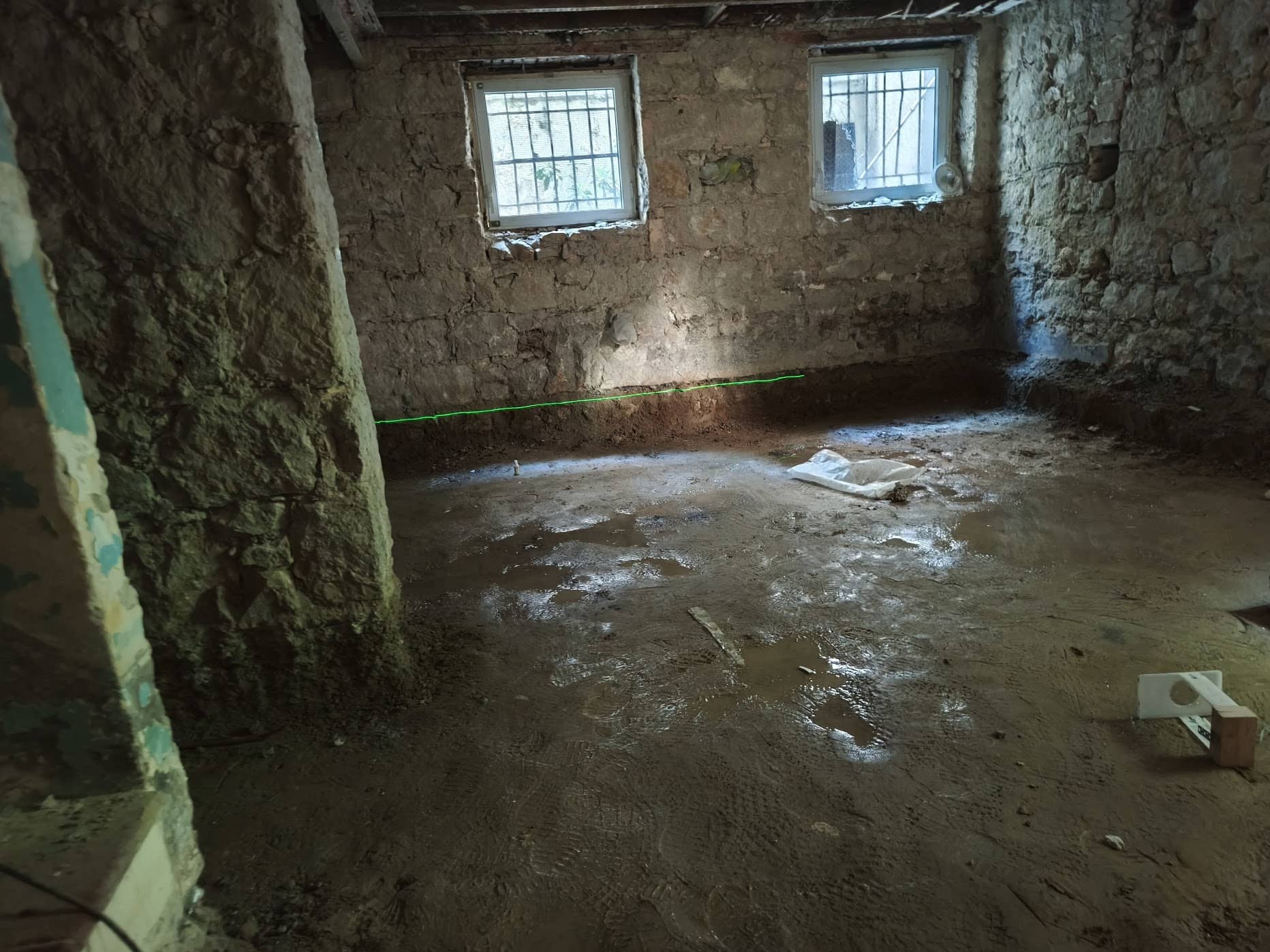
Civilly case: water rises from below
In this house, the basement was regularly flooded. The source of the problem was the high groundwater level. Water rose from below through the floor, threatening the structure and finishes.
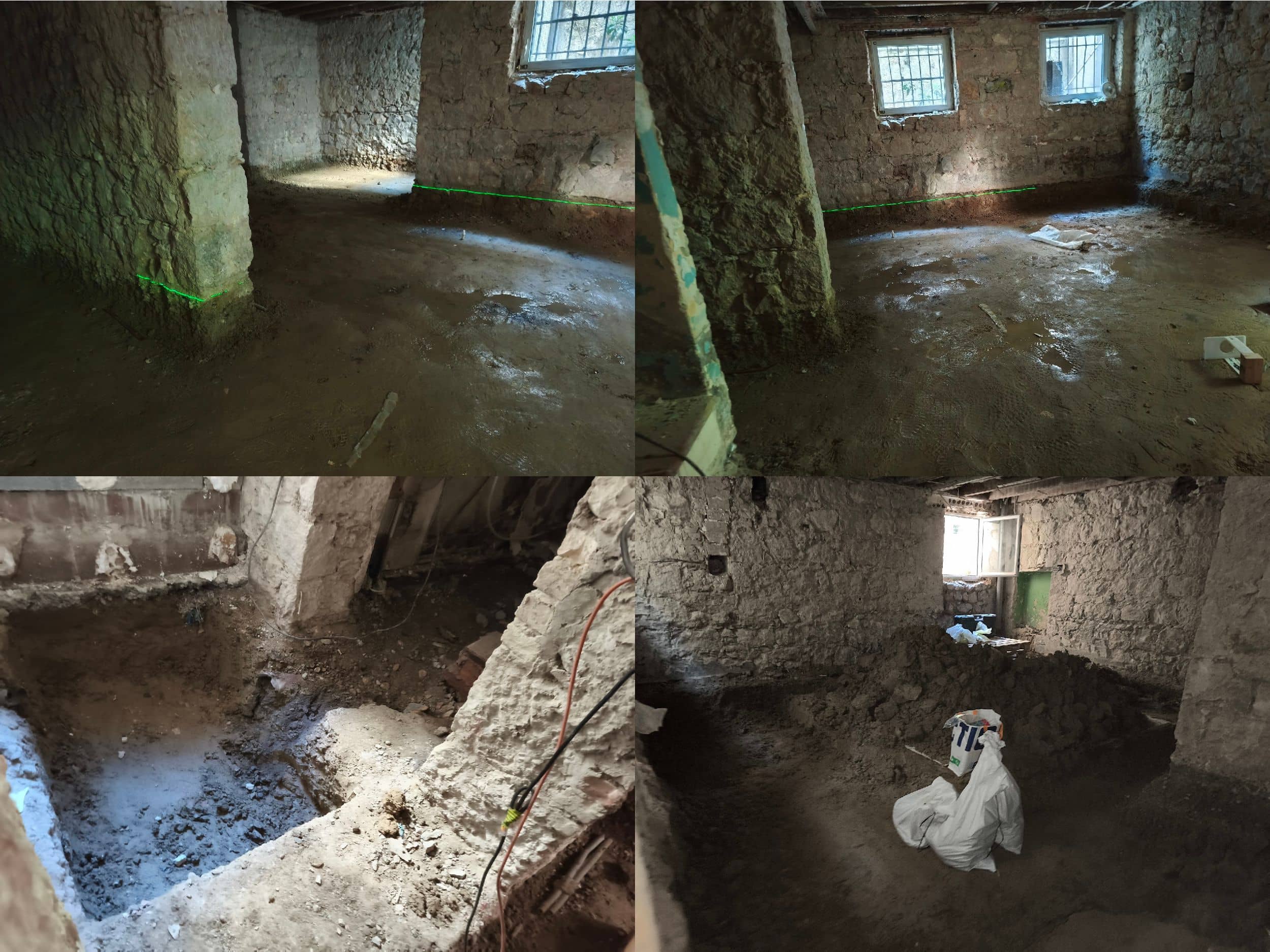
To solve this problem, a comprehensive set of works was required, including dismantling the old screed and floor slab, removing clay, installing a drainage layer, and multi-layer waterproofing.
Drainage layer: first stage of protection
- Floor dismantling and clay removal
The old floor and screed were completely removed. Water-saturated clay was taken out. In some areas, water was standing. - Drainage layer installation
A layer of crushed stone was laid instead of clay. Perforated pipes wrapped in geotextile were embedded into the drainage layer. Pipes have a slope and lead to a common drainage intake. - How it works
If water rises to the pipe level, it enters the drainage intake and is pumped out.
Multi-layer waterproofing of floors and walls
- Membrane — plastic studded membrane
- Reinforced concrete floor slab — with reinforcement
- Coating waterproofing — epoxy-based materials
- Finishing — screed with underfloor heating, additional corner waterproofing
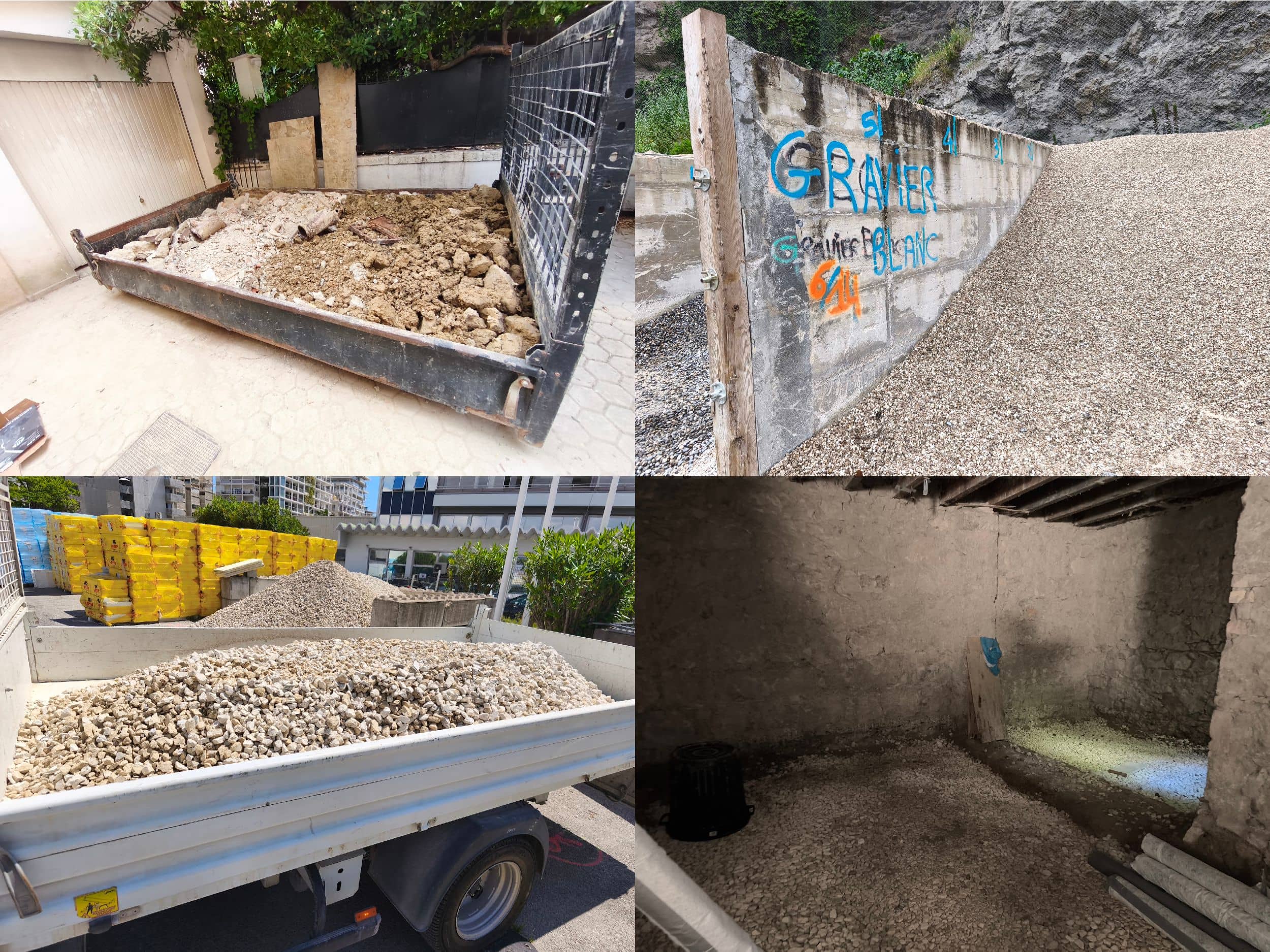
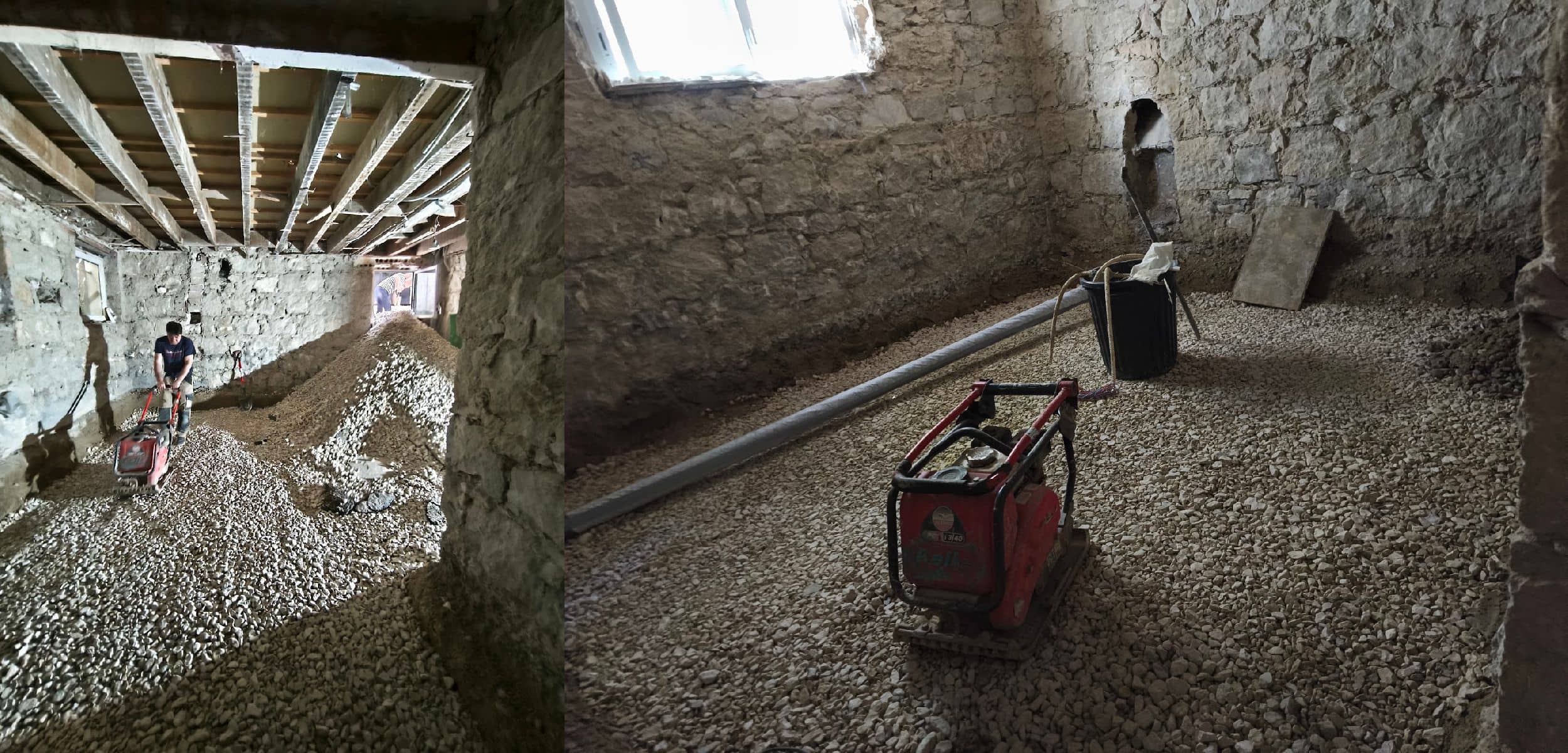
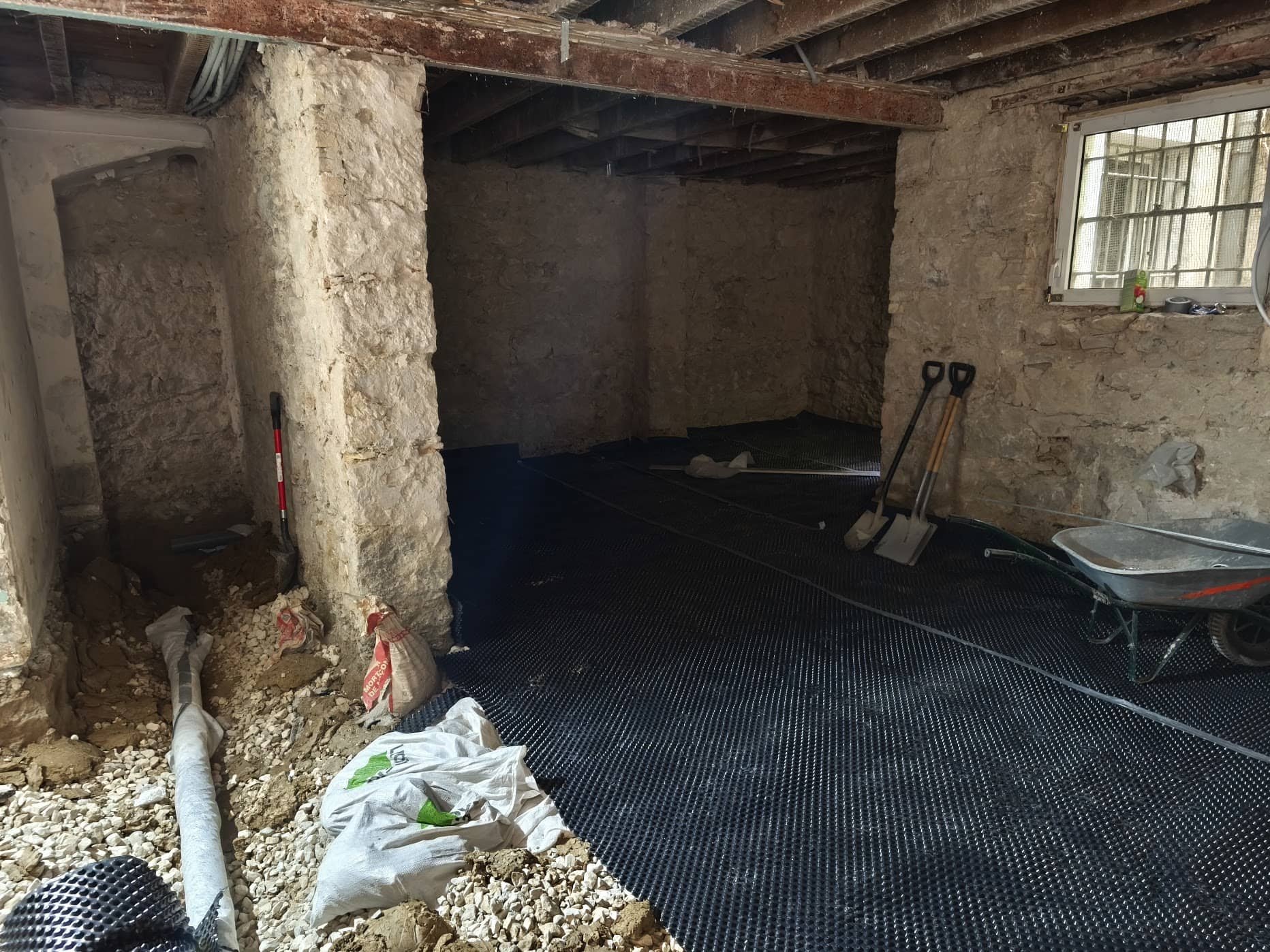
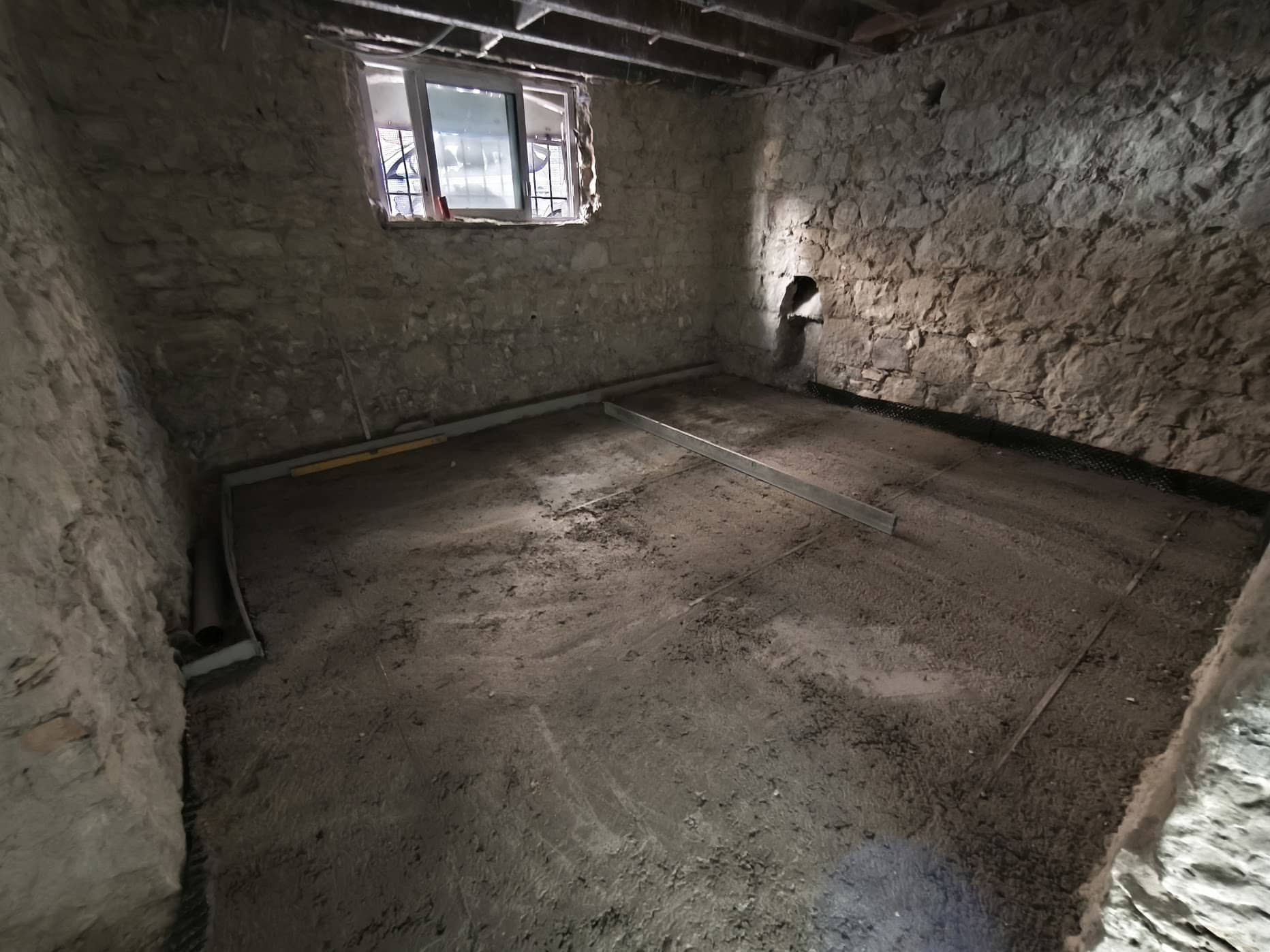
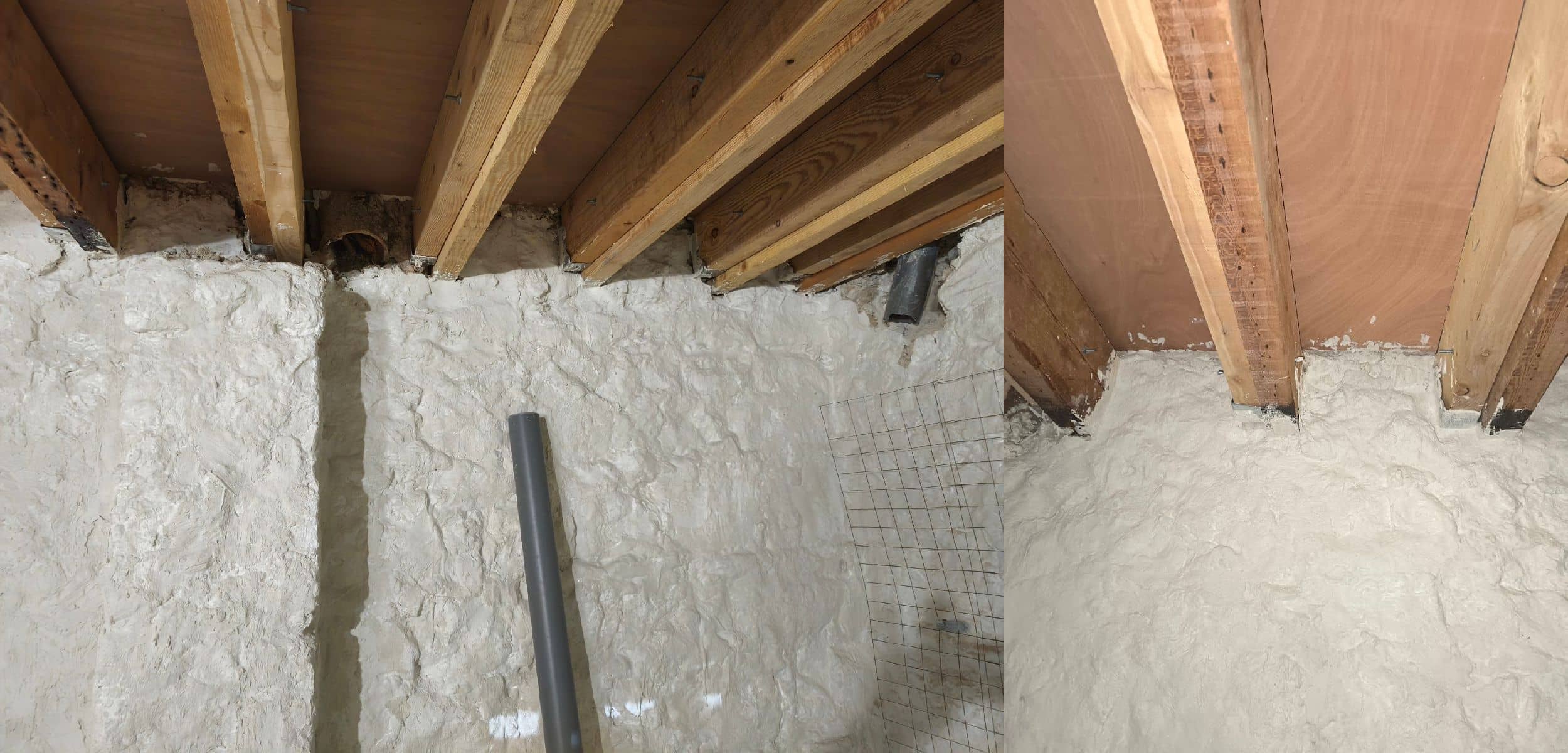
Result: the basement is completely dry, regardless of groundwater levels.
What to do if water penetrates through basement walls
Sometimes water enters the basement not from below, but through the foundation walls. This can happen even with a normal drainage layer under the floor.
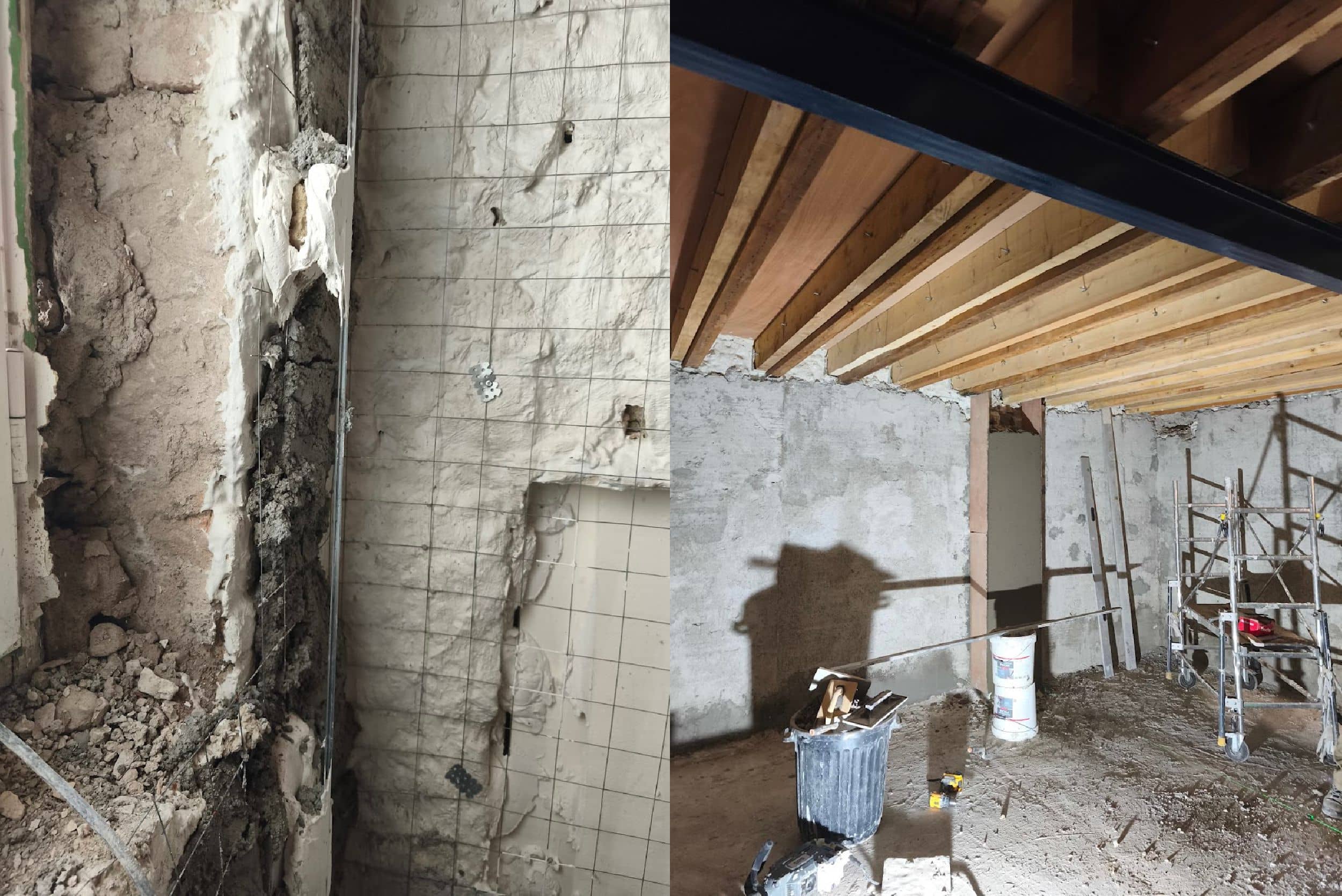
Recommendations for protection
- External wall waterproofing
- Perimeter drainage
- Paving and rainwater diversion
- Internal waterproofing as additional protection
External protection: paving and water drainage
To minimize water impact on walls and foundation:
- Paving: sloped slab around the house
- Rainwater collection from gutters: water from the roof is directed to a collector or storm sewer
- Perimeter drainage: pipes along the foundation with geotextile
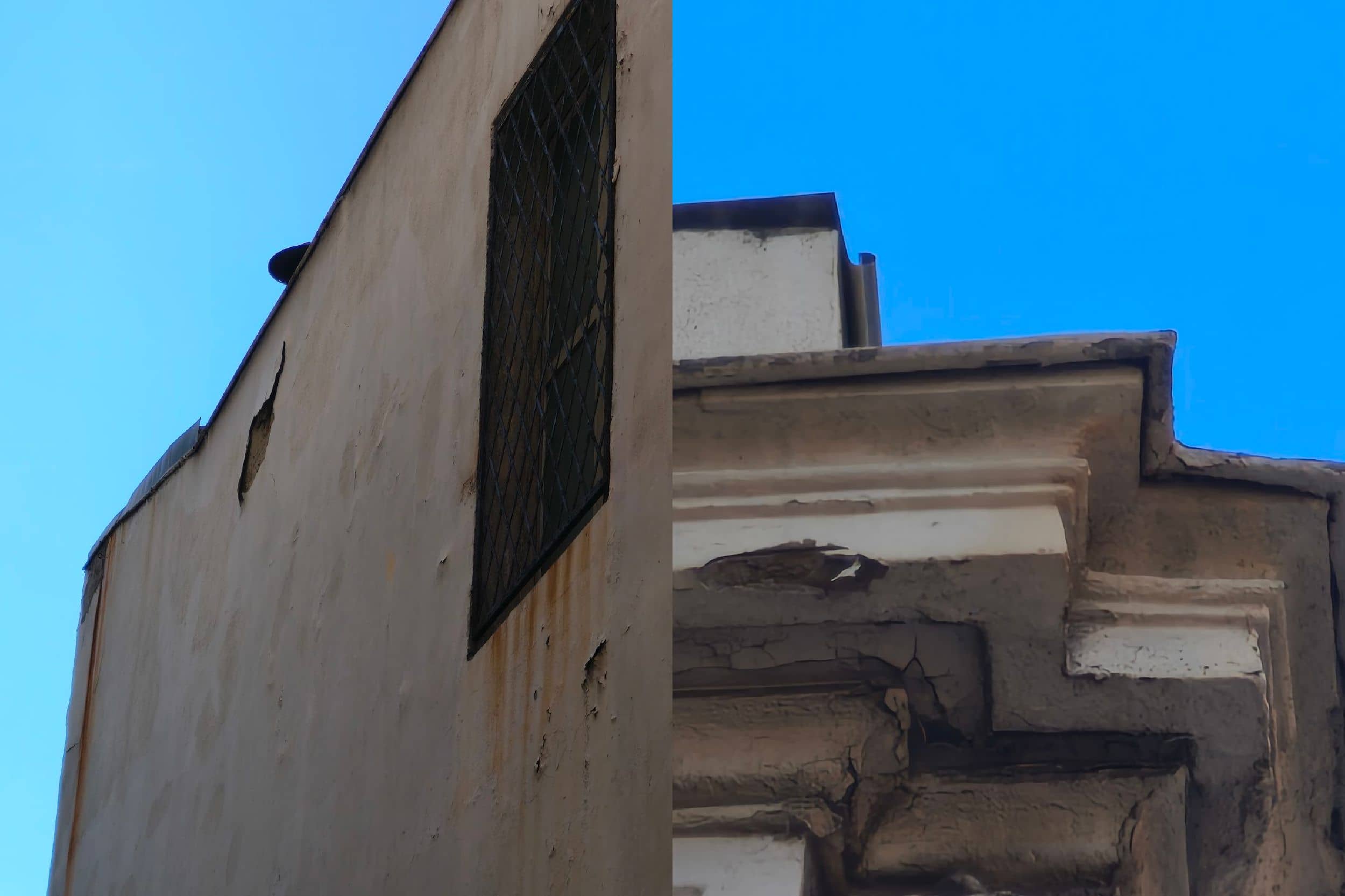
Combined approach: the key to reliable protection
In practice, it is more effective to combine internal and external measures:
- External waterproofing and paving reduce water load on the foundation and walls.
- Internal drainage and multi-layer waterproofing of floors and walls prevent residual moisture entry.
- Modern materials allow protection of the basement for decades.
Basement waterproofing cost and how it increases house value
Our company credo is that every investment in Civilly should bring real benefit to the owner. Houses with problematic basements are often sold significantly cheaper — which is an opportunity for those who know how to calculate the budget. By purchasing an undervalued property and performing a comprehensive villa renovation, including basement waterproofing, you turn useless basement space into full living area and simultaneously increase the property value.
In our Nice project, a 70 m² basement was completely unused due to moisture. After waterproofing, these 70 m² became functional and increased the useful area of the house. Before renovation, the price per square meter was €4700–4800, while the average price in the Nice market is €6500–7000.
The benefit is obvious: investing in waterproofing turns into property value growth.
Regarding the cost of the works, it is difficult to name an exact number. Each project starts with a comprehensive basement survey, possible boreholes for soil and structure analysis, after which the engineer develops a detailed waterproofing and drainage system project. Only then is the exact estimate prepared. This approach ensures the budget is calculated as accurately as possible, and invested funds bring real value — protection from groundwater and property value growth.
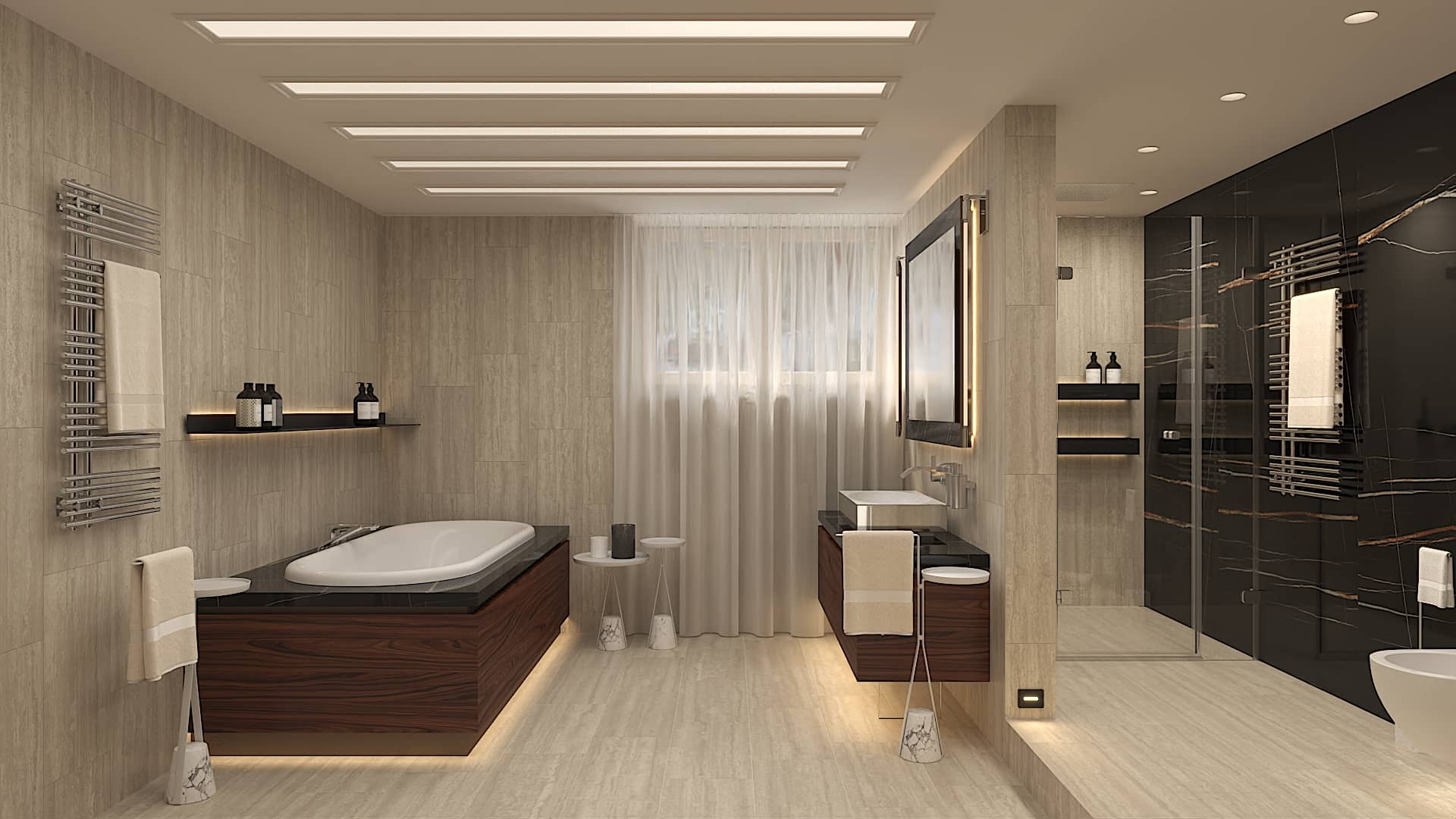
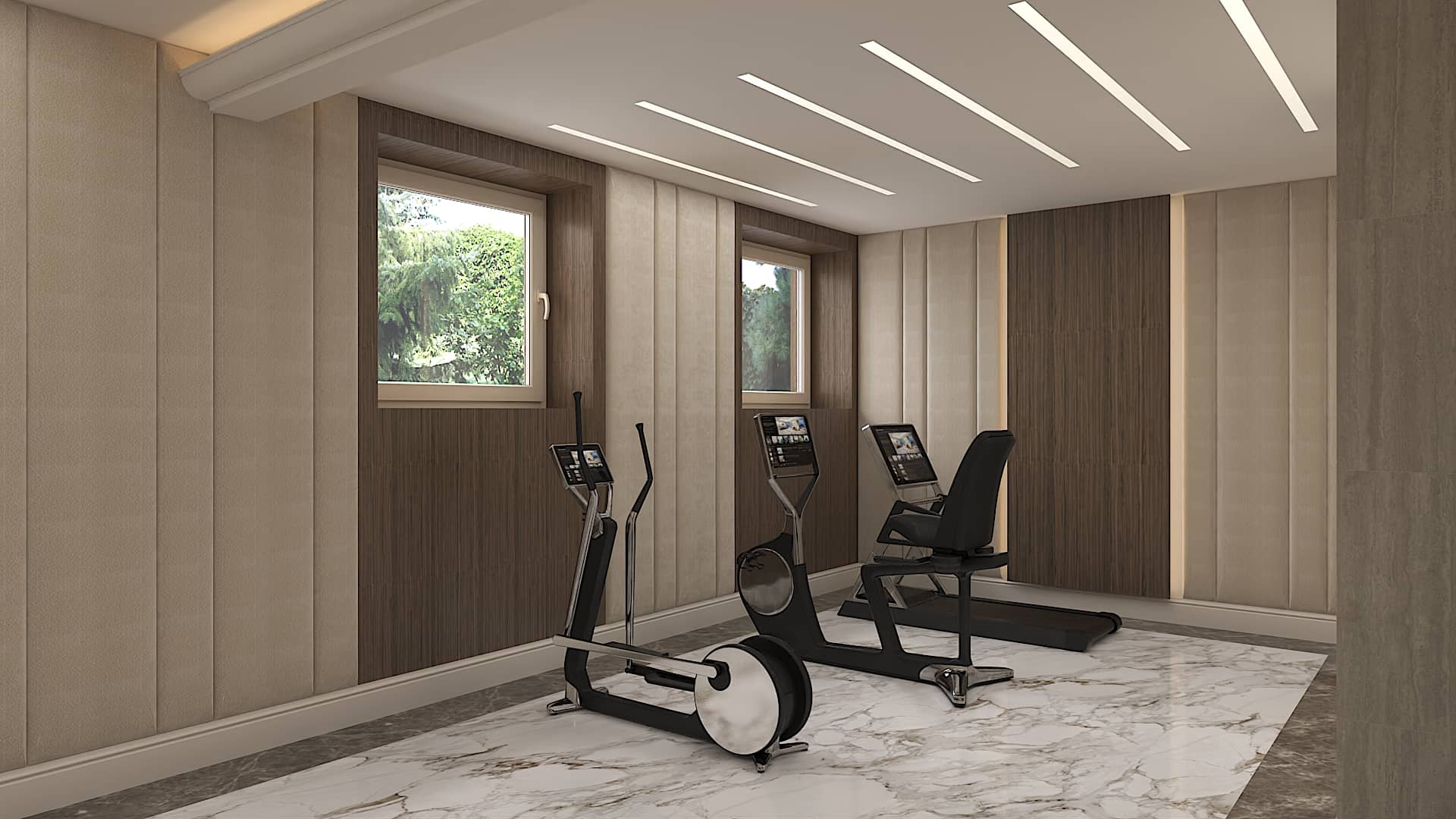
Basement transformation: bathroom and fitness area before and after renovation
Bathroom
Before renovation, the basement room was damp and unused. After comprehensive waterproofing and renovation, the room became a modern and functional bathroom.
Fitness area
Before renovation, the basement was unused. After waterproofing and finishing, a modern fitness area was installed with safe flooring and ventilation.
Conclusion
The Civilly project in Nice demonstrates that a comprehensive approach — drainage, multi-layer waterproofing, external water diversion measures — fully protects the basement even with high groundwater levels and possible wall moisture penetration. This approach ensures long-term operational reliability, allows safe use of basements as full living spaces, and significantly increases property value on the French Riviera.
Our architects and designers work as a unified team with professional hotel managers, construction engineers, specialists in electrical, heating, plumbing, ventilation, and air conditioning, as well as furniture production experts — ALL IN ONE COMPANY. This allows all necessary consultations during project development, project coordination with contractors, and precise cost calculation.
A full team of experienced professionals will work on your project, knowing how to create a project from scratch and implement it efficiently — professional hotel managers, architects, designers, engineers, builders, and procurement managers.
We don’t just design, build, and furnish apartments — we create to be proud of!
Looking for the best team to design and renovate an apartment or villa on the French Riviera? Civilly specialists will do everything possible!

 View my LinkedIn profile